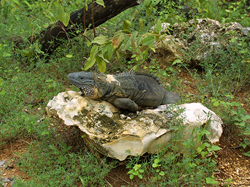
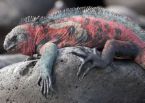
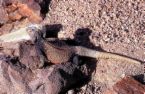
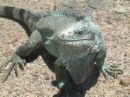
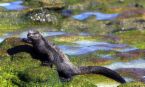
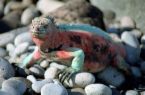
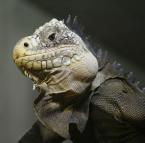
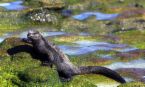
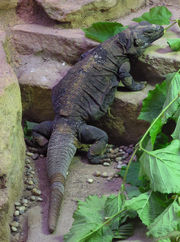
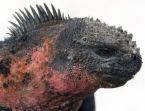
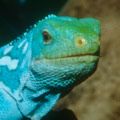
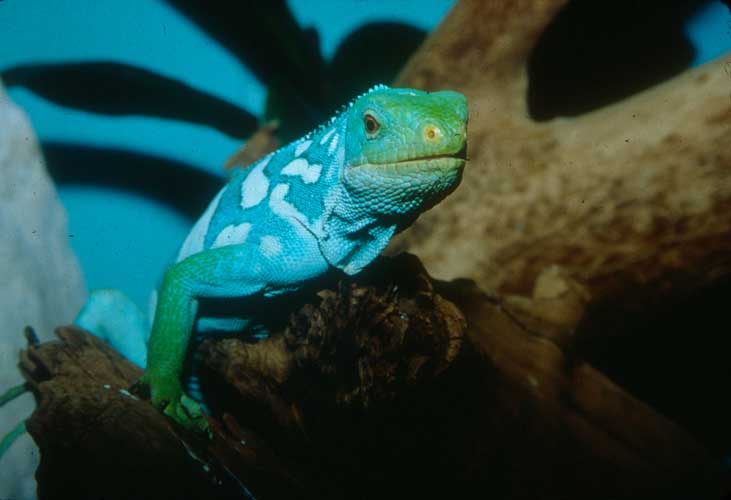
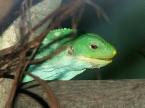
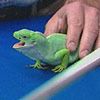
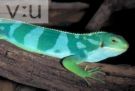
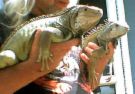
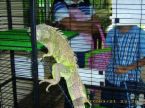
Iguana Physical Appearance: Full-grown green iguanas are usually between four and six feet, although they have been known to grow up to seven feet long. This includes the tail, however, which can make up about half the body length and, in addition to its green color, has black stripes. Green iguanas, not surprisingly, are green in color, but can be found in many different shade ranging from bright green, to a dull, grayish-green. Their skin is rough, with a set of pointy scales along the iguana's back. Green iguanas have long fingers and claws to help them climb and grasp. There are different types of Iguanas like: Green Iguanas: Green Iguanas are the most common kind of Iguana. The Green Iguana was originally only found in Central and South America, but there are green iguanas in the Antillean iguana: is both the common name for several of the larger members of tropical lizards in the family Iguanidae, and the scientific name of the genus within Iguanidae comprised of two extant members, the green iguana (I. iguana) and the lesser Antillean iguana (I. delicatissima). In the broader sense, iguanas are scattered over several genera and include the desert iguana (Dipsosaurus dorsalis), the marine iguana (Amblyrhynchus cristatus), Galápagos land iguanas (genus Conolophus), and spiny-tailed iguanas (genus Ctenosaura). The iguana family, Iguanidae, also includes smaller species whose members are not called iguanas. Iguanas provide values for the ecosystem and for humans. Ecologically, they are important to food chains, consuming largely plant matter and being eaten by various predators. For humans, they add to the wonder of nature and the green iguana has been a popular food source in Central and Male Due to habitat destruction and, more significantly, the introduction of mongooses and house cats to the islands, populations of these iguanas have been declining over the past century. Both species of Fijian iguanas are considered to be endangered and have full protection under both The Blue Iguana or Grand Cayman Iguana (Cyclura lewisi) is a critically endangered species of lizard of the genus endemic to the The Blue Iguana prefers dwelling in rocky, sunlit, open areas in dry forests or near the shore, as the females must dig holes in the sand to lay eggs in June and July. The Blue Iguana's vegetarian diet includes plants, fruits, and flowers. Its coloration is tan to gray with a bluish cast that is more pronounced during the breeding season and more so in males. It is large and heavy-bodied with a dorsal crest of short spines running from the base of the neck to the end of the tail. The fossil record indicates that the Blue Iguana was abundant before European colonization; but fewer than 15 animals remained in the wild by 2003, and this wild population was predicted to become extinct within the first decade of the 21st century. The species' decline is mainly being driven by predation by feral pets (cats and dogs) and indirectly by the destruction of their natural habitat as fruit farms are converted to pasture for cattle grazing. Since 2004, 219 captive-bred animals have been released into a preserve on Adaptations: Besides the long fingers and claws mentioned above, green iguanas have many excellent interesting adaptations. Green iguanas have good senses of hearing and smell, and superb vision. Their long tail is also quite sharp, and is snapped in the air as a defense mechanism. The tail can also break off if caught by a predator, but grows back without permanant damage. Green iguana skin is very water resistant, and tough to avoid cuts and scratches. The coloring of the skin helps camoulflage the green iguana, which means that they blend in easily to their surroundings to remain undetected by predators. If they are etected however, and need to escape quickly, these iguanas can dive from trees into water, and swim well. Green iguanas are quite sturdy-- they can fall 40-50 feet to the ground without getting hurt! Male green iguanas have a special flap of skin called the dewlap. Male iguanas can raise their dewlap to appear bigger than they really are, either to intimidate predators, or to impressive females. Both male and female green iguanas can store fat under their jaws and in their necks for times when there is not much food available. Habitat: Iguanas live in tropical rainforest areas, generally in lower altitudes in areas near water sources, such as rivers or streams. They spend most of their time high in the forest canopy, about 40-50 feet above the ground. Behaviour: Iguanas are diurnal, meaning that they are awake during the day. They are also cold-blooded, which means they do not produce their own body heat. In other words, if it is cold, the iguana is cold too. So to stay warm, green iguanas bask in the sun, lying on warm rocks as they soak up the sun's heat. eproductive Cycle and Family Habits: Green iguanas tend to live alone, but may be seen in groups occasionally in good sunny basking spots. Iguanas lay many eggs at a time (about 50), in holes inthe ground called burrows. They also dig pretend burrows to confuse any animals that may be looking for eggs to eat. After female iguanas lay the eggs, they leave them and do not return. When iguana babies hatch, they grow up without care from their parents. Green iguanas lay many eggs, but only 3-10 babies actually survive to be adults. It takes green iguana eggs about 8-10 weeks to hatch, then takes baby iguanas about 2 years to become mature adults. Diet: Green iguanas are omnivorous, so they eat both plants and meat. They tend to eat mostly plants, though, especially leaves and fruits. Sometimes green iguanas (especially young ones) will eat eggs, insects, and small vertebrates.
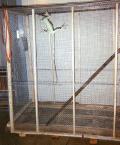
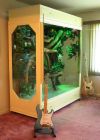
Iguana: this is a good lizard for you first lizard. They are friendly as long as you start holding them when they are little. They are also fairly low maintance. Some of the things you will need to get started. You should have a 10 to 20 gallon tank with a locking lid. You will need to have a heating pad under one side of the tank with a rock on top of the same side of the tank. You will also need a heat lamp to one side of the tank. You will need to put a beading in the tank like cal sand is the best (it is made out of calcium and can be digested by the animal and not stay in its stomach.) Put a couple of things in the tank so the animal can climb and also help the animal shed. You can feed the animal cricks once a week or so for every day feedings you should feed it vegetables. (You can take carrots, celery cucumbers, cabbage, and other vegs like that in a blender. chop them up, or put them in the food presser and put them in ice-cube trays and freezing them.) That way you can take what you need out to feed the animal, it cuts down on waste and it saves time by cuttin down the prep time, By prepping a months worth of food at a time. You can control how big the animal getts two ways dy how much you feed them and by the size of the tank. First its simple the more you feed them the faster they grow. The second is the will only grow to there habitat the bigger cage the bigger they will get. As the animal gets bigger you can build or purchase different types of cages to fit the animal and also to fit your home. If you hold and play with your animal to keep them socialized you can train to
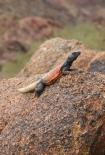
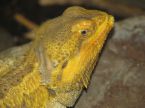
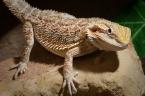
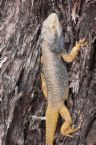
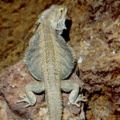
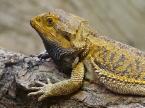
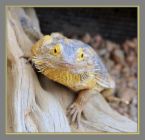
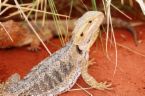
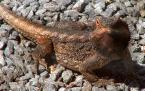
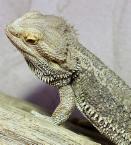
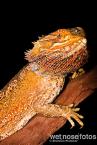
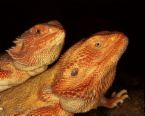
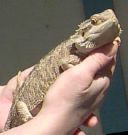
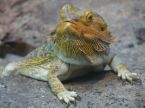
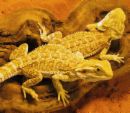
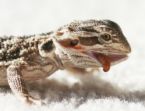
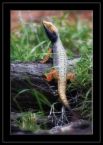
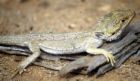
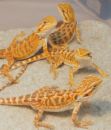
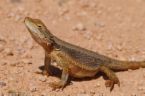
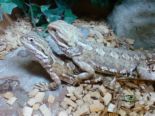
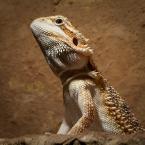
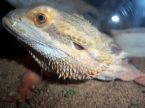
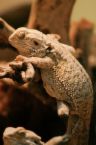
Bearded Dragons There are different types of bearded dragons also: The inland bearded dragon is the largest of all the species, and grows to around 20cm in size. This species is found in every state, and territory of The Mitchells bearded dragon is found in the interior of the The dwarf-bearded dragons, considered to be closely related to the Mitchell species, are mainly found in the
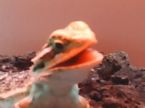
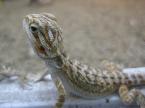
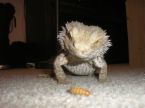
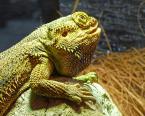
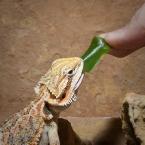
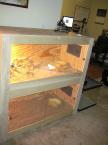
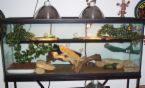
The Nullabor bearded dragon is a very rare species found only in a small area between the South Western, and It is possible that there are still undiscovered species of bearded dragons in Inland bearded dragon They are originally found in In the pet industry today, many inland bearded dragons are bred in captivity as they live and breed well. Due to the massive breeding by many professional breeders due to the high demand of the market, the market is quite saturate in certain places, and price drop recently in the pet trade and making them readily available and affordable for many bearded dragon enthusiasts. To help you in recognizing this type of inland bearded dragon, just keep in mind that this species has a pair of distinctive spot on the neck base. This can be seen on inland bearded dragons only. The reason of the popularity of this reptile is that they are docile, friendly and quite close to human. Coastal Bearded Dragon Comparing to the popularity of inland beardie, this coastal bearded dragons is rarely seen in the pet community. They are nothing difference in term of size compared to bearded dragon inland, but the color of this type of bearded dragon is quite dull and darker. They do not have the distinctive spots on the neck base as seen on inland dragon. This type of bearded dragons is more aggressive and harder to tame. These might be the reasons why the pet community prefers inland dragon. Rankin Dragon This type of bearded dragon is quite hard to find in the pet community. One of the biggest attractions of this Rankin bearded dragon and making them in high demand is that they are quite small in body size comparing to the Inland and Coastal dragons. The biggest size of their body is about 13 inches long. Another way to differentiate this type of bearded dragon is that they are lacking of inflatable beard. I hope these type of bearded dragons comparison can make you understand more on the differences of these species. ABOUT BEARDED DRAGONS Bearded Dragons are one of the most intelligent of all reptiles. Beardies have individual personalities and are capable of learning to a very high degree. But beardies also have one characteristic that has helped to make dragons the most popular reptile for 10 years running: they are said to bond with humans at the level of a dog or cat. True? Yes, but this characteristic is most apparent when the dragon reaches subadult or adult age and is no longer in pure survival mode, i.e., running away from everything at warp speed. Once a bearded dragon reaches the subadult to adult age, they are less afraid of being eaten by predators and will generally calm down. We have adult dragons that love to hang out with us while we watch TV or will sit on our shoulders while we enjoy the summer sun on the patio. Some appreciate praise, respond to their names, like their heads scratched, etc. They are all individuals but all of our beardies respond to gentle human interaction. More Than One? Juvenile bearded dragons can be quite territorial and sit on a fellow cage mate preventing him or her from eating or drinking. If more than one beardie has found its way to your heart or home, keep the dragons in separate cages where they cannot see each other especially during the dragons' adjustment period. As adults, this social hierarchy presents few problems and we house adult females together often. This is one way to observe the behavior of Arm Waving, an endearing characteristic. HEALTH CHECKS One of the most useful purchases you can make is a gram scale. Keeping weight and feeding records will alert you when something isn't quite right. This enables you to correct the issue before it becomes life-threatening. Good husbandry and frequent informal exams will keep your dragon happy and healthy for many years. Before brumation which occurs typically during the dragon's second year, it is advisable to have a qualified reptile vet check a stool sample. Fecal checks can alert you to any parasites before the dragon goes to "sleep" and is most vulnerable to parasitic attacks. Just as you worm a puppy, you will probably need to worm your dragon at some point in his life HOUSING A 20 gallon long aquarium is usually adequate to house a 6" juvvie for a few months. This size is long enough to allow proper temperature gradient but small enough for the juvvie to locate prey items. As your dragon grows, it will require a larger enclosure. We use white cages with clear sliding doors vented in the back as shown in our Gallery section. These cages are easy to clean, keep valuable UVB and bright, visual light inside the cage rather than spreading it through the glass walls of an aquarium. These cages are 48" x 24" x 24" high or 18" high. This size is large enough to allow for single dragons or up to 3 adults. This special Fire and Ice Dragons set up comes complete with UVB fixture, ceramic heat fixture and UVB Repti-Sun 5.0 UVB bulb. The front is sliding glass doors. Vents are located in the back. The cages stack. The only other items you will need to purchase are the appropriate substrate (we ONLY use papertowels or Repti-Sand since Repti-Sand has never caused impaction problems for us in 8 years), 2 high-range reptile thermometers (or digital probe thermometers or an infrared temp gun) and a clear household light bulb to use for the basking light. DO NOT use heat rocks or heating pads which burn a dragon's sensitive belly. The only items in our juvvie bins are thermometers, a feeding dish and a shallow water dish. That's it. Otherwise, prey items will crawl under logs and branches where the juvvie cannot locate them, come out at night and bite the helpless juvvie. You will have plenty of time to design an elaborate habitat when the dragon is old enough. FEEDING Another fairly easy lizard is the Bearded Dragon. They are considered the dog of the lizard world they are well temperament, friendly, easy to care for. They are a little more expensive than an Iguana to purchase. They come in a verity of colors and sizes. You should house them in a 20 to 55 galloon tank. You should have a heating pad and heat lamp for this lizard also. Cal-sand would be a good bedding material for this animal also. You only need to feed then crickets every two weeks. For daily feeding you should feed it vegetables. (You can take carrots, celery cucumbers, cabbage, and other vegs like that in a blender. chop them up, or put them in the food presser and put them in ice-cube trays and freezing them. That way you can take what you need out to feed the animal, it cuts down on waste and it saves time by cutting down the prep time. You should also have a spray bottle so you can control the humidity in this tank it should be about 20 to 40% in the tank you can get a humidity gage (hygrometer) for about 2 to 4 dollars, it will also help you keep track of the temp in the cage which should be around 75 to 85 degrees ferinhit. You should also have an uva/uvb bulb. It should be on for 12 hours a day. After you buy your pet you should weight 3-4 days to handle him so he can get use to his surroundings that will help to reduce stress.
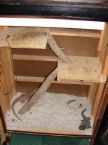
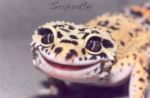
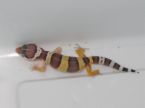
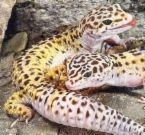
Leopard Geckos Leopard Geckos are another good lizard pet. They are not really one that you can hold like the iguana or the Bearded Dragon. They are fun to watch and can be held a little they are faster which makes them harder to hold. If you are going to get just one or two lizards you only need a 10 to 20 galloon take to house it. If you are going to 3 or more you really need to look at getting a 20 to 30 gallon tank. You will need a heating pad under the bottom of the tank. Cal-sand is a must for this animal. You will need to get a hiding rock so the lizard has a place to hide and to cool down when they need to. They also like to play in things like toilet paper roles and things with little hide a hole. These little lizards are real characters these lizards don’t need vegs. They only eat things like crickets and mealworms. You should feed them 12 to 24 crickets 1 to 2 times a week. You should keep the tank about 75 to 85 degrees also only leaving the heating pad on at night
|                                                                    |
